
Resources
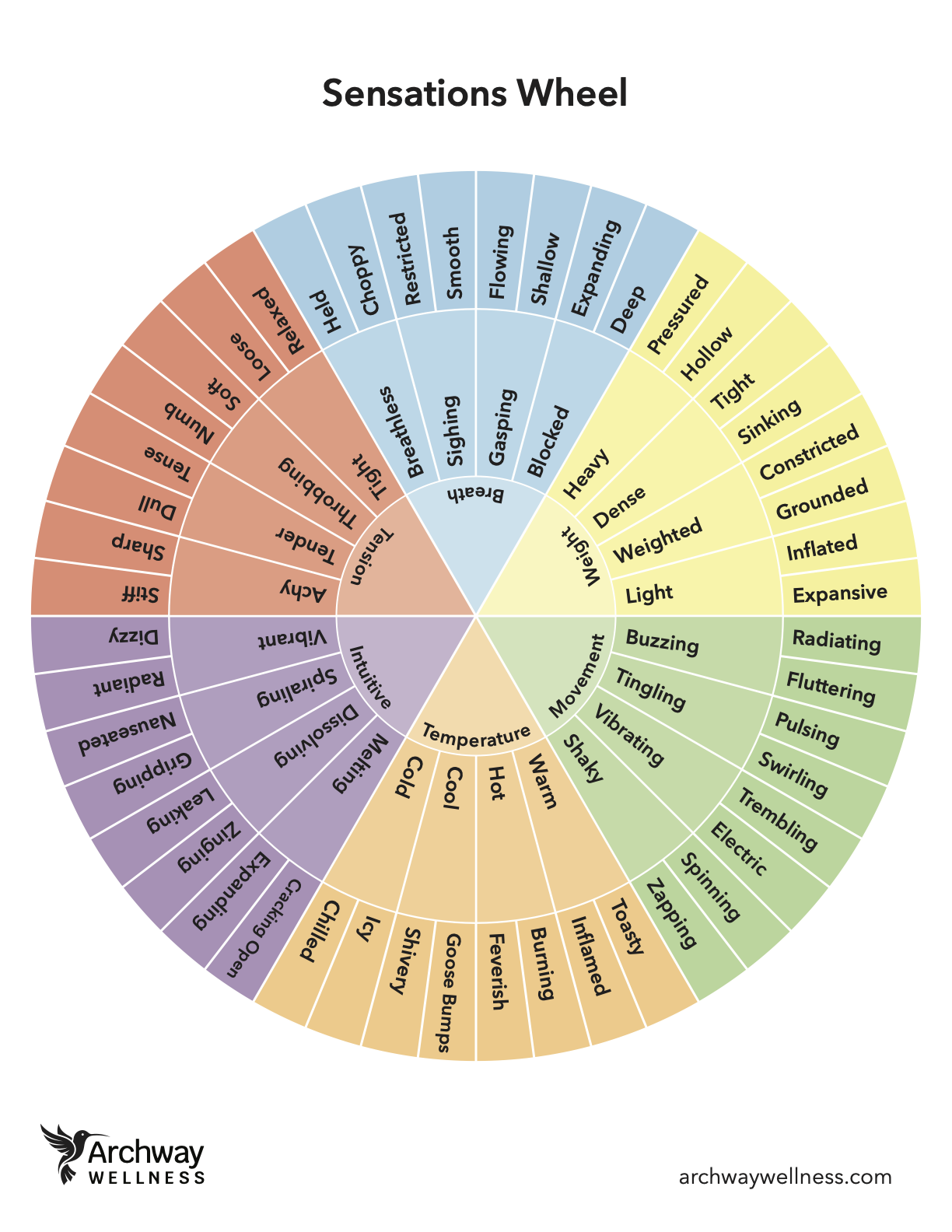
Sensations Wheel
Develops moment-to-moment body awareness. Sensations like tight, heavy, warm, fluttery, numb, or grounded are the nervous system’s first language. For those with chronic stress or early adversity, body signals were often ignored or overwhelming and became hard to trust. This wheel gently rebuilds that connection by inviting people to notice sensations without adding story or interpretation, so the body becomes information, not a problem. Over time, this increases embodiment, supports regulation, and helps people notice early signals of stress, safety, or need before they escalate.
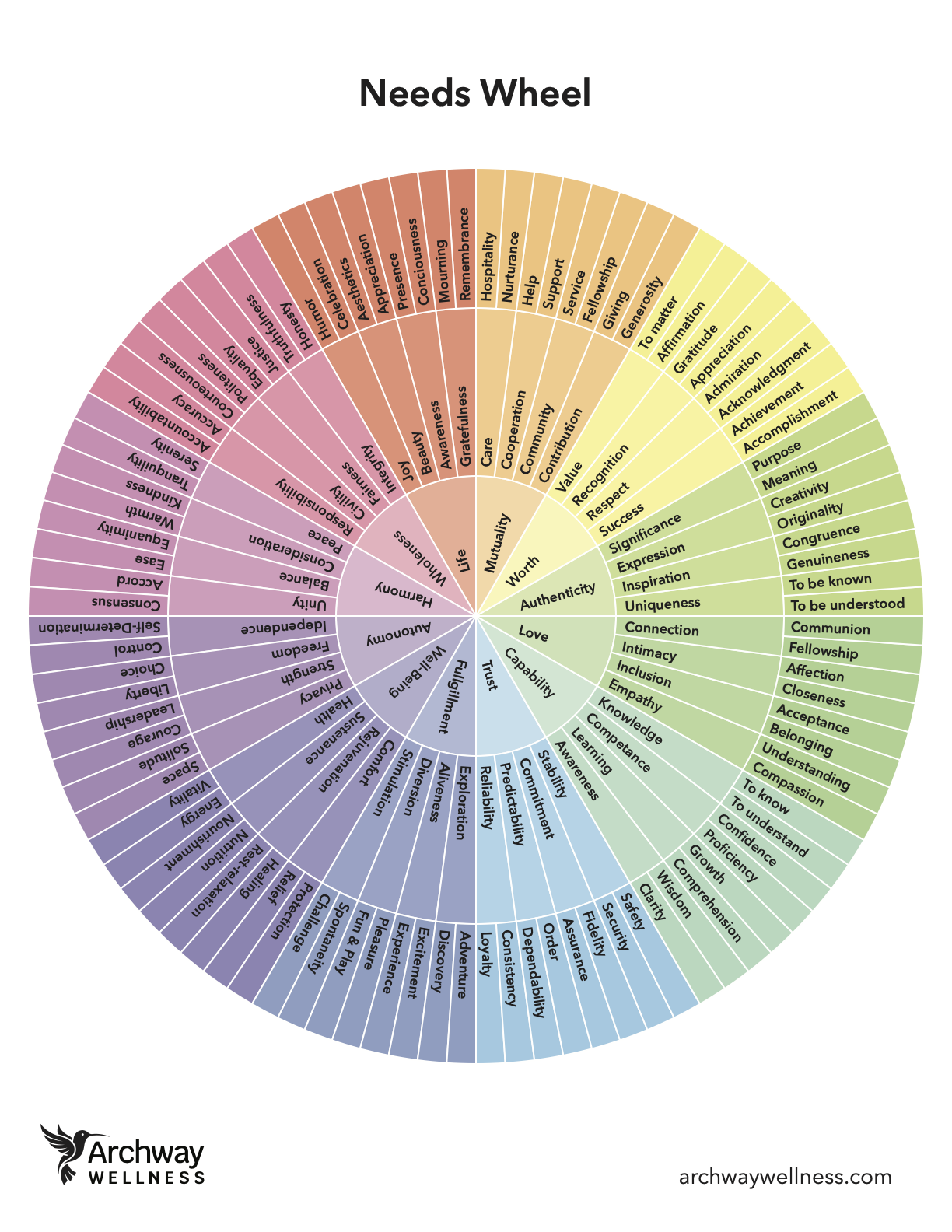
Needs Wheel
Helps reveal the needs beneath our reactions, emotions, and patterns. When needs like safety, rest, connection, autonomy, or support go unmet, the nervous system responds protectively. Many of us were never taught to name our needs—especially if we learned to prioritize others or stay quiet. The Needs Wheel shifts the question from “What’s wrong with me?” to “What might I be needing right now?” Used gently and without pressure, it invites curiosity, builds self-understanding, reduces shame, and supports responding to ourselves with care instead of judgment.
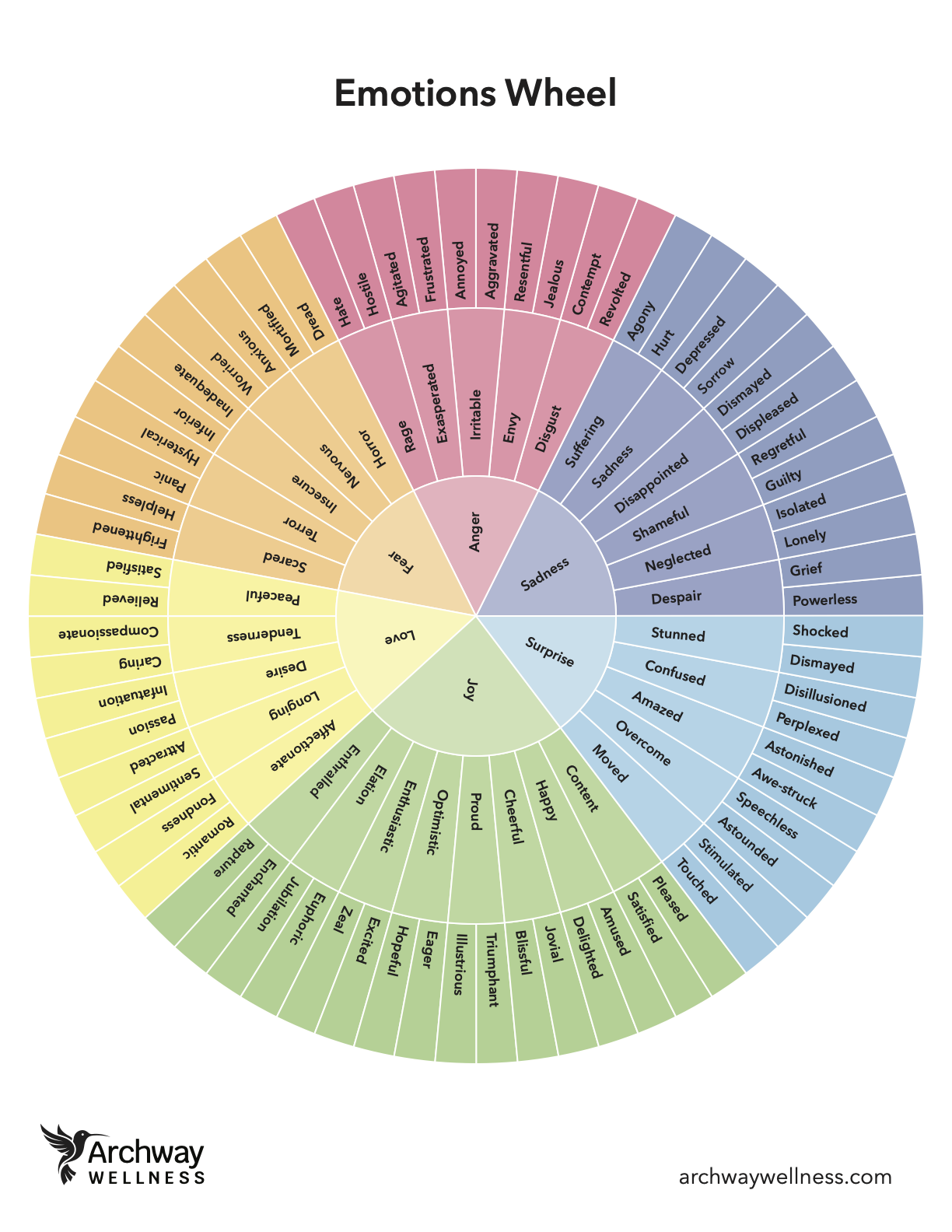
Emotions Wheel
Expands emotional awareness beyond familiar labels like fine, stressed, or overwhelmed. Many people learn to minimize, suppress, or intellectualize emotions to feel safe. The wheel offers language for a wide range of emotions, making it easier to notice what’s present without becoming flooded. Instead of asking people to "figure out" their feelings, it provides a visual reference so they can choose at their own pace. This supports naming emotions, tracking patterns, and seeing layers of feeling—without needing to analyze or fix. Naming emotions in this way can soften their intensity and help regulate the nervous system.
Women in the Community
-
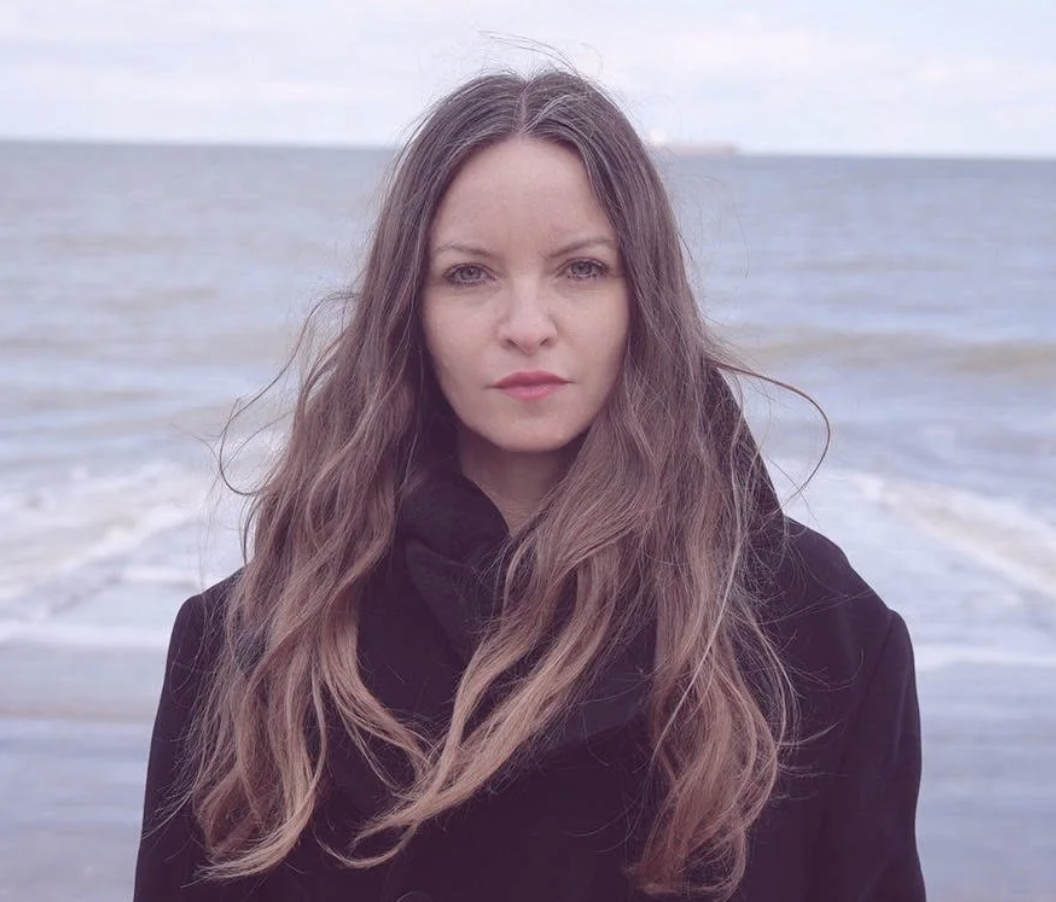
Tree is a published author, TEDx speaker, and practitioner in the field of Transpersonal Psychology, specializing in dreams, death, altered states of consciousness, and psychedelic integration.
A graduate of the Alef Trust in Psychedelics, Altered States & Transpersonal Psychology and a CPD Certified Death Doula, Tree brings depth, compassion, and experiential insight to her work.
She teaches at the College of Psychic Studies, The Psychedelic Society, and She’s Lost Control, guiding students in the art of conscious dreaming, esoteric practice, and spiritual embodiment.
Her creative background in music, writing, and film continues to infuse her teachings with artistry and imagination.
As a Dreaming Guide, Tree helps individuals explore their inner realms through lucid dreaming, oneirogenic plants, and ritual practices.As a Death Doula, she supports those at the end of life with spiritual, emotional, and practical care.
Tree is the author of several books, including Dreams, Conscious Dreamer, A Spell A Day, and Dreamwork, with more titles forthcoming.
She is devoted to illuminating the intersections between the dreaming mind, consciousness, and the great mystery of being alive.
-
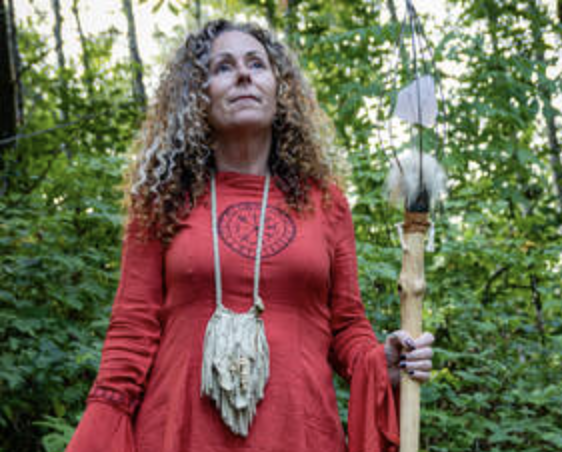
Catherine is a Certified Earth Medicine, Shamanic, and Trauma-Informed Practitioner, as well as a writer and photographer. She is the co-creator of Shaenalach Healing and Retreats, where for over a decade she has offered spiritually rooted, holistic, and integrative healing through one-to-one sessions, gatherings, ceremonies, rituals, and retreats.
Her work is devoted to helping others find their way home—to themselves. Catherine supports those seeking their own answers and authentic connection to Life, Love, and the Great Mystery, guiding them to rediscover the wisdom and wholeness that already reside within.
At her core, Catherine describes herself as “a messy human learning to live with an open and willing heart,” continually listening, learning, and healing her way back home.
Reading List
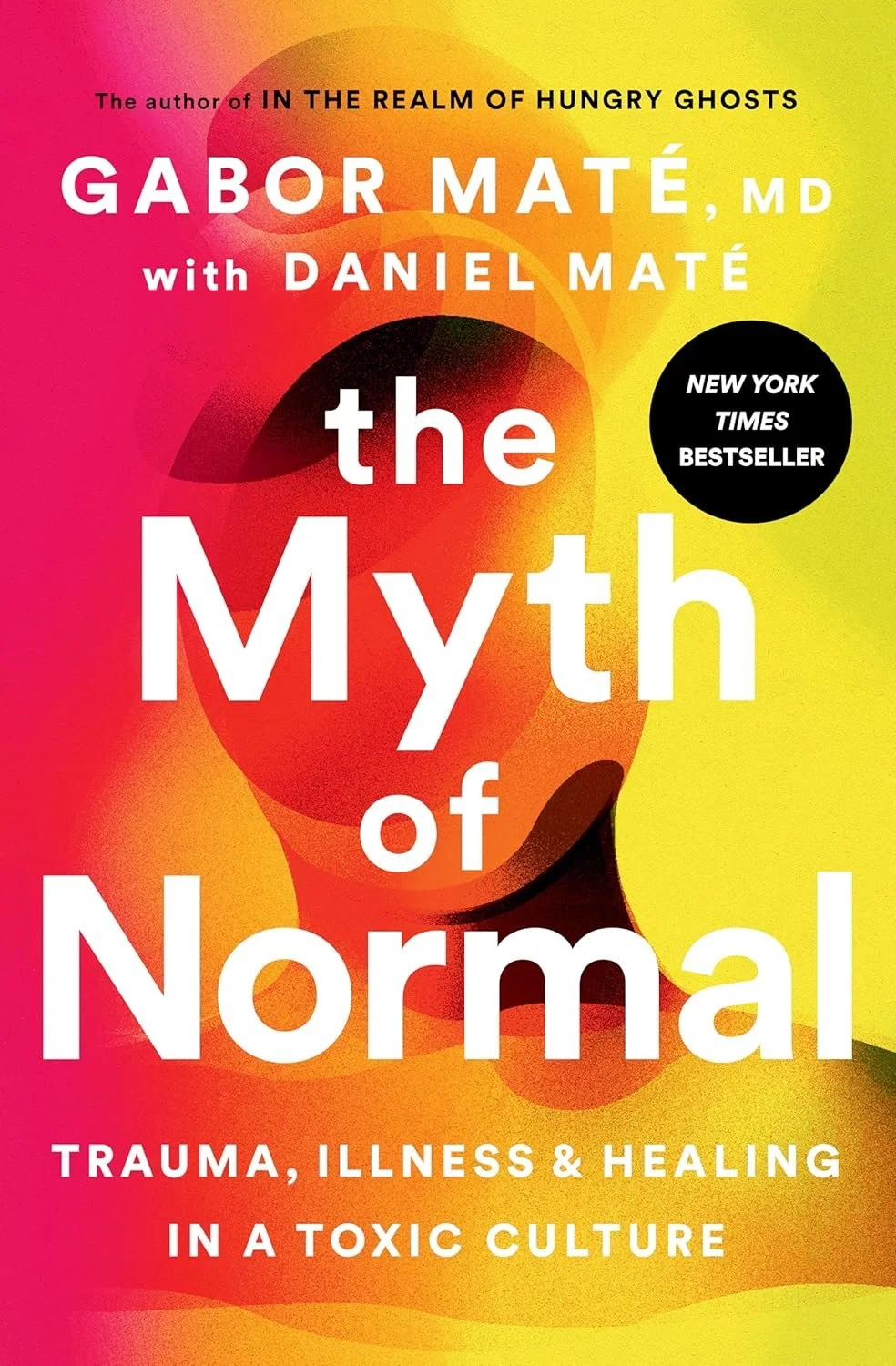
The Myth of Normal
Trauma, Illness, and Healing in a Toxic Culture
by Gabor Maté, MD • Amazon
In this revolutionary book, renowned physician Gabor Maté eloquently dissects how in Western countries that pride themselves on their healthcare systems, chronic illness and general ill health are on the rise. Nearly 70 percent of Americans are on at least one prescription drug; more than half take two. In Canada, every fifth person has high blood pressure. In Europe, hypertension is diagnosed in more than 30 percent of the population. And everywhere, adolescent mental illness is on the rise. So what is really “normal” when it comes to health?
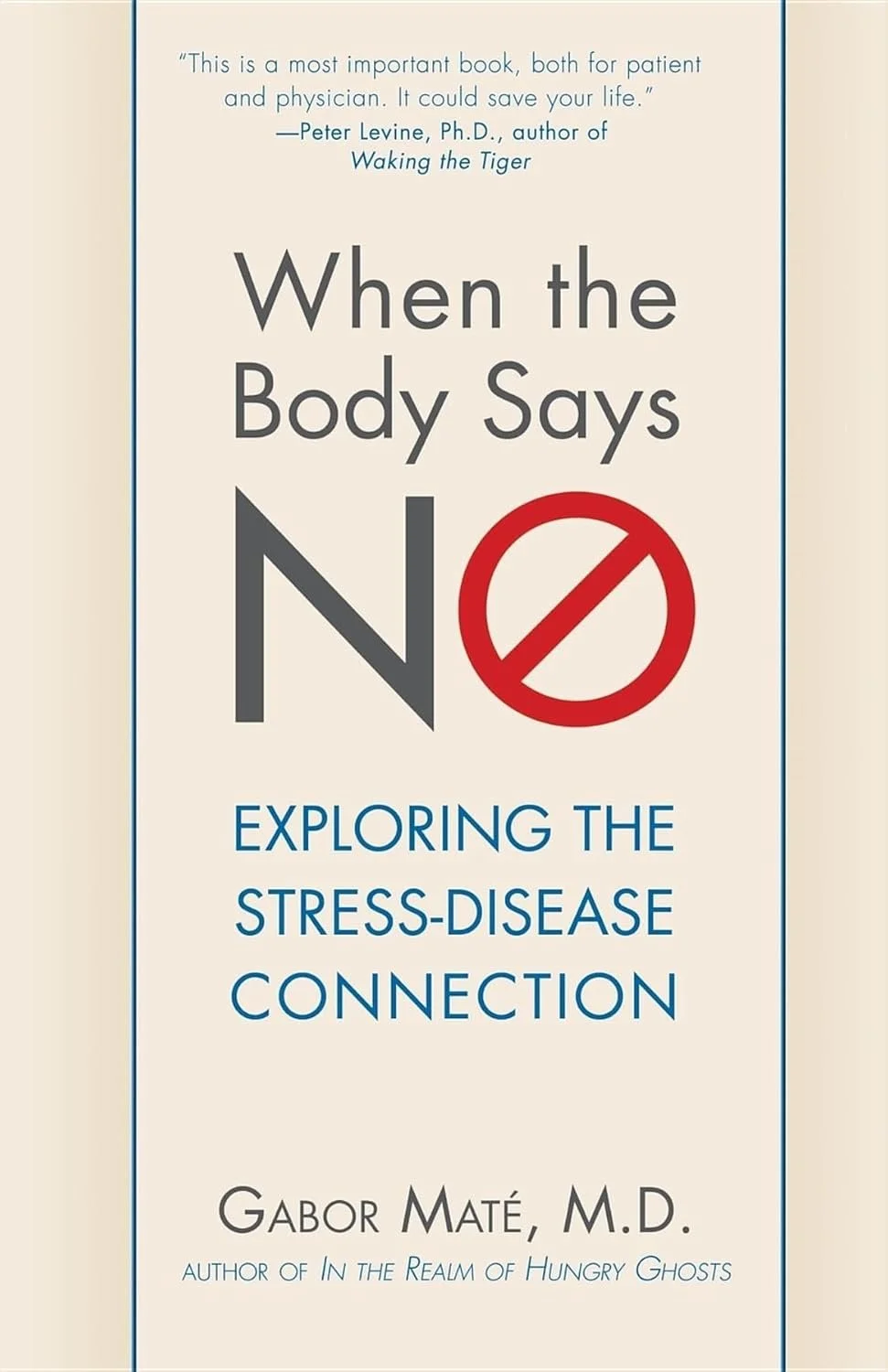
When the Body Says No
Exploring the Stress-Disease Connection
by Gabor Maté, MD • Amazon
Through the lens of moving personal stories, medical doctor and best-selling author Dr. Gabor Maté shows how emotion and psychological stress play a powerful role in the onset of chronic illness, cancer, and many other serious illnesses.
Drawing on scientific research and the author's decades of experience as a practicing physician, this book provides answers to important questions about the effect of the mind-body link on illness and health and the role that chronic stress and one's individual emotional makeup play in an array of common diseases.
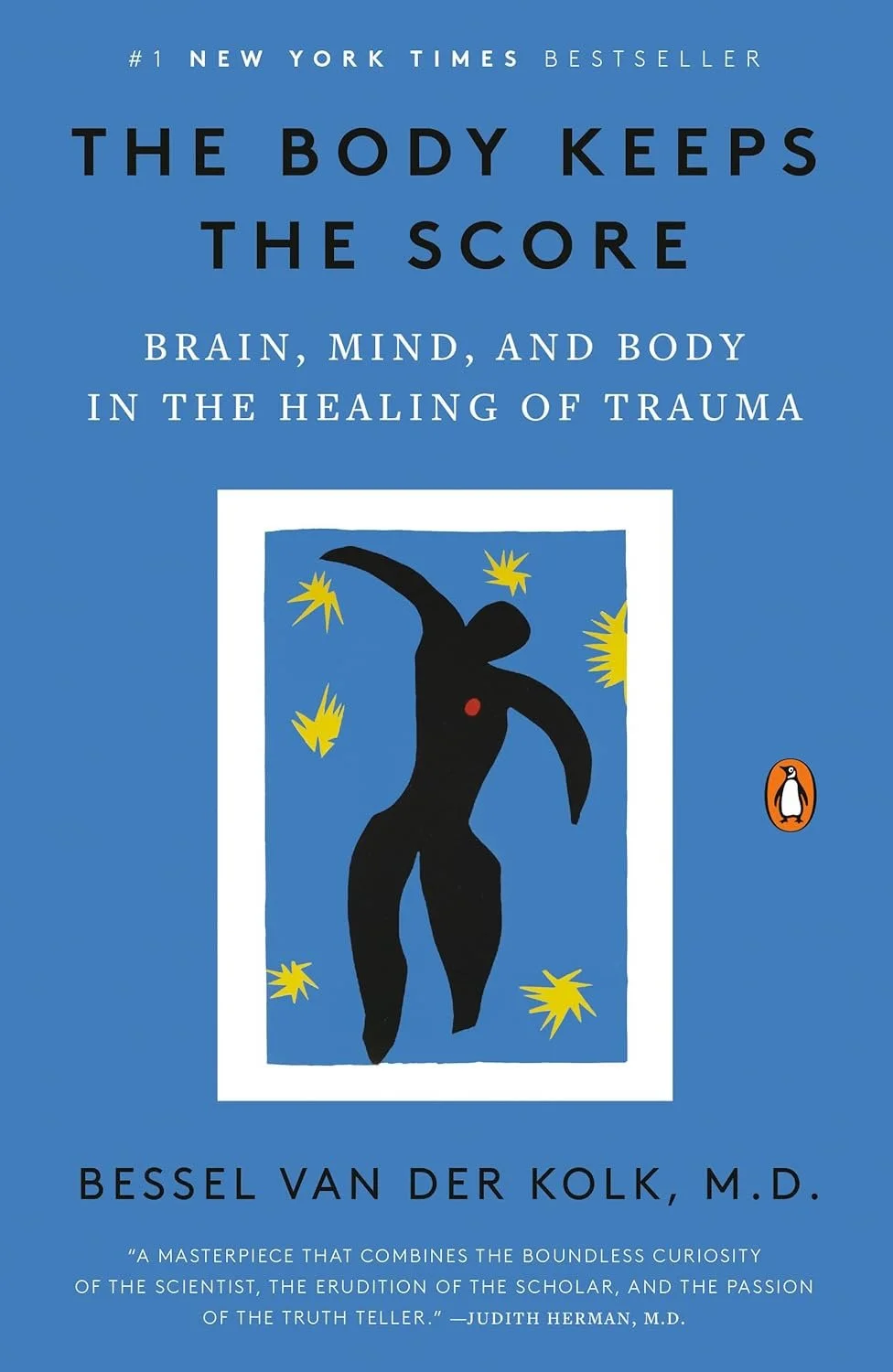
The Body Keeps the Score
Brain, Mind, and Body in the Healing of Trauma
by Bessel van der Kolk, MD • Amazon
Dr. Bessel van der Kolk, uses recent scientific advances to show how trauma literally reshapes both body and brain, compromising sufferers’ capacities for pleasure, engagement, self-control, and trust. He explores innovative treatments—from neurofeedback and meditation to sports, drama, and yoga—that offer new paths to recovery by activating the brain’s natural neuroplasticity.
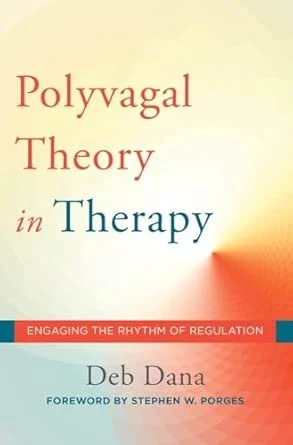
The Polyvagal Theory in Therapy
Engaging the Rhythm of Regulation
by Deb Dana • Amazon
This book offers therapists an integrated approach to adding a polyvagal foundation to their work with clients. With clear explanations of the organizing principles of Polyvagal Theory, this complex theory is translated into clinician and client-friendly language. Using a unique autonomic mapping process along with worksheets designed to effectively track autonomic response patterns, this book presents practical ways to work with clients' experiences of connection. Through exercises that have been specifically created to engage the regulating capacities of the ventral vagal system, therapists are given tools to help clients reshape their autonomic nervous systems.
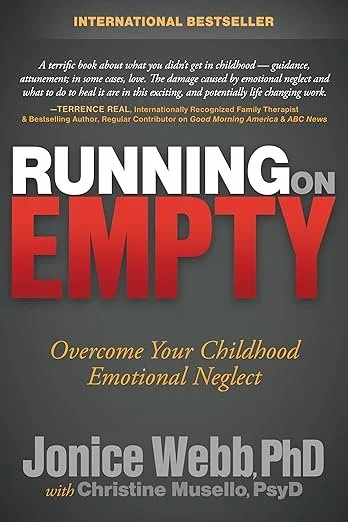
Running on Empty
Overcome Your Childhood Emotional Neglect
by Jonice Webb, PhD • Amazon
This informative guide helps you identify and heal from childhood emotional neglect so you can be more connected and emotionally present in your life.
Running on Empty will help you understand your experiences and give you clear strategies for healing.
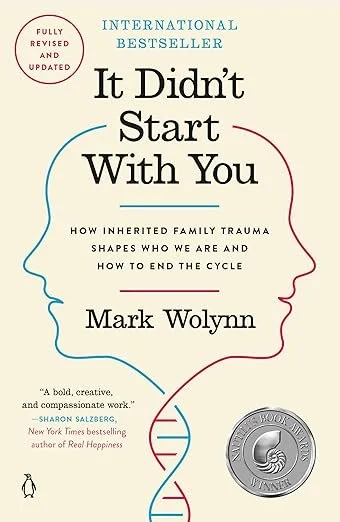
It Didn't Start with You
How Inherited Family Trauma Shapes Who We Are and How to End the Cycle
by Mark Wolynn• Amazon
Depression. Anxiety. Chronic Pain. Phobias. Obsessive thoughts. The evidence is compelling: the roots of these difficulties may not reside in our immediate life experience or in chemical imbalances in our brains—but in the lives of our parents, grandparents, and even great-grandparents. The latest scientific research, now making headlines, supports what many have long intuited—that traumatic experience can be passed down through generations.